Applying graph theory to redraw fair electoral district boundaries
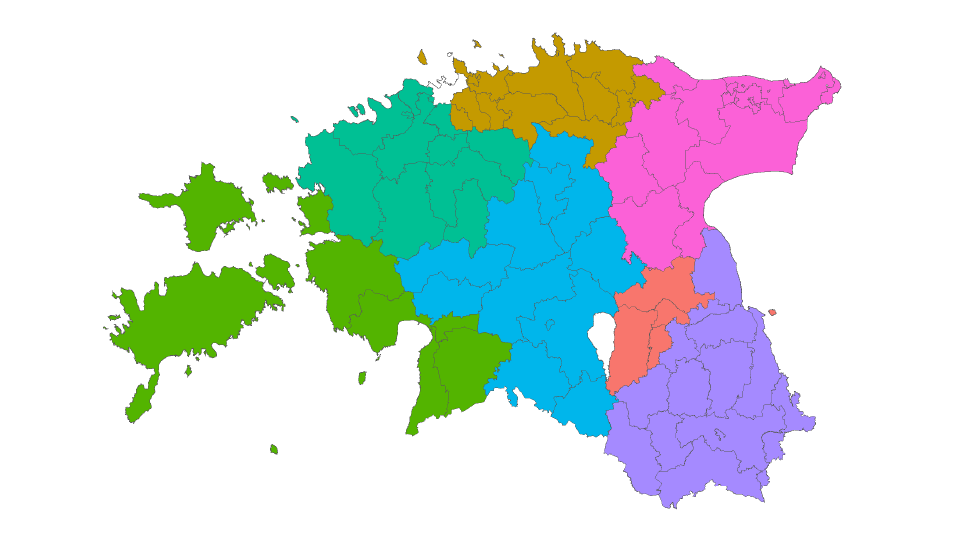
This project explored alternative electoral district boundaries for Estonia’s parliament, the Riigikogu, with the aim of achieving more equal representation. Using voter figures from the 2023 parliamentary election and municipal boundary data, it examined configurations of 6–16 districts, seeking to balance voter numbers and seats while keeping districts geographically connected and compact.
Led by our analyst Annegrete Molloka, the team developed a graph-based algorithm to generate and assess thousands of possible district configurations. Municipalities served as the building blocks, with special arrangements for Tallinn and, in some scenarios, Tartu. The alternatives were evaluated by the number of voters per seat, differences in seat allocations, and geographical compactness.
Working with Estonia’s State Electoral Office, the team selected 38 alternatives for the final report. Each includes a map, district-level figures, and simulated results based on votes cast in 2023. These simulations assume unchanged voting behaviour, providing a basis for comparing how different boundaries could affect seat distribution.
Special thanks to external collaborators Jesus Alva-Samos and Ariana Cortes Angel, whose contributions were central to the project’s methodology and results.